
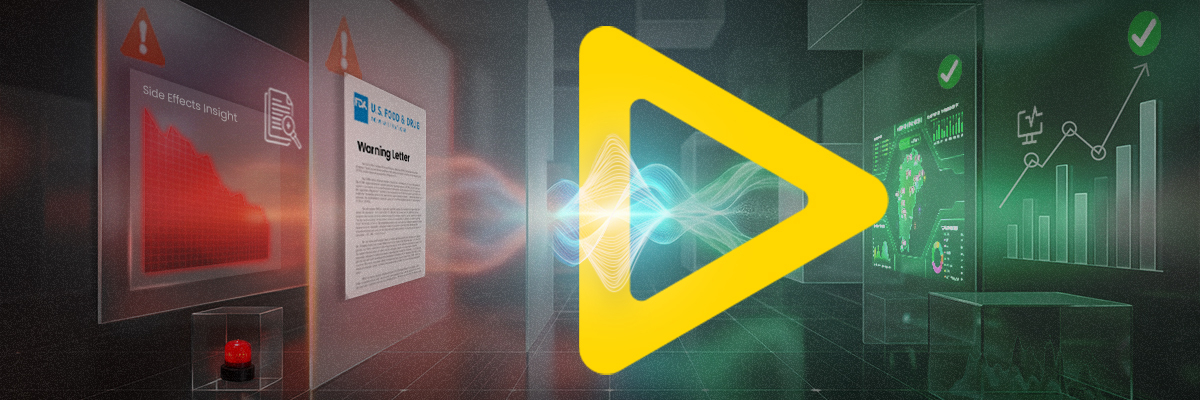
In March 2026, the U.S. Food and Drug Administration (FDA) issued a warning letter to a global specialty pharma company citing significant violations of post-market adverse drug experience (PADE) reporting requirements following an inspection conducted between January and February 2025.
While warning letters are not uncommon in the life sciences industry, this particular case highlights an important reality: pharmacovigilance compliance cannot exist only on paper—it must function effectively in real-world safety operations.
When Compliance Gaps Become Systemic
The FDA’s observations suggest that the issue was not a single reporting error or an isolated lapse. Instead, the findings pointed toward systemic weaknesses across several critical pharmacovigilance functions, including:
- Case intake and case validity assessment
- Case evaluation and reporting timelines
- Follow-up procedures
- Vendor oversight
- Internal quality oversight
In multiple examples referenced in the warning letter, adverse event cases appeared to have been rejected, invalidated, or delayed for reasons that were not aligned with FDA reporting expectations. Additionally, the agency noted that the corrective actions proposed by the company did not sufficiently demonstrate that the underlying issues had been fully resolved or that similar problems would be prevented in the future.
This underscores an important message from regulators: corrective actions must address root causes, not just symptoms.
Why This Matters for the Entire Industry
Pharmacovigilance reporting is one of the core mechanisms through which regulators and manufacturers maintain trust in the safety of medicines. When serious or unexpected adverse events are delayed, filtered, or inconsistently evaluated, the impact extends far beyond compliance.
Such gaps can affect:
- Signal detection and risk identification
- Regulatory confidence in safety monitoring systems
- Public trust in medicines
- Most importantly, patient safety
For regulators, timely and accurate reporting is essential for identifying emerging safety signals and making informed regulatory decisions. Any breakdown in this process can significantly weaken post-market surveillance.
PV Failures Rarely Start with One Big Error
One of the most important lessons from cases like this is that pharmacovigilance failures rarely stem from a single dramatic mistake. More often, they emerge from a combination of smaller operational weaknesses, such as:
- Ambiguous case definitions
- Inconsistent intake and triage workflows
- Inadequate training or knowledge gaps
- Inefficient handoffs between teams or vendors
- Weak governance and oversight mechanisms
Individually, these issues may appear manageable. However, when they intersect across complex safety operations, they can create serious compliance risks.
This is why inspection readiness cannot be treated as a documentation exercise. It must be embedded into the operating model of pharmacovigilance systems and processes.
The Growing Need for Smarter PV Infrastructure
As pharmacovigilance operations become more global and data volumes increase, relying on fragmented and manual workflows becomes increasingly difficult to sustain.
Modern safety operations require:
- Robust case intake and triage mechanisms
- Standardized case assessment workflows
- Strong literature and evidence review processes
- Integrated vendor oversight and governance
- Continuous quality monitoring and audit readiness
Technology-enabled platforms can play a critical role in supporting these needs by improving data consistency, traceability, and operational transparency across the safety lifecycle.
The Role of Automation and AI in Addressing Systemic Gaps
To address such systemic gaps, the role of automation and AI is becoming increasingly critical in modern pharmacovigilance operations.
AI-enabled safety systems can support teams by minimizing the risk of missed or misclassified cases, ensuring that serious adverse events are appropriately identified, and maintaining the integrity of critical safety data throughout the case lifecycle.
By enhancing case intake, automating validity assessments, enabling structured data capture, and continuously monitoring reporting timelines, these technologies help reduce delays, inconsistencies, and manual dependencies that often contribute to compliance risks.
More importantly, automation ensures that every safety case and data point contributes effectively to the broader safety ecosystem. This strengthens signal detection, improves visibility into emerging trends, and enables more proactive and data-driven safety decision-making.
When implemented effectively, AI and automation act as a critical safeguard layer—enhancing operational consistency, improving traceability, and reinforcing the reliability of pharmacovigilance processes while supporting sustained regulatory compliance.
Datafoundry’s Perspective
At Datafoundry, we believe that effective pharmacovigilance is not defined solely by regulatory compliance—it is defined by how consistently and reliably safety systems protect patients and withstand regulatory scrutiny.
Addressing systemic gaps in pharmacovigilance requires more than well-documented processes. It demands a combination of strong operational discipline, robust governance, and intelligent technology that can support teams at scale.
In this context, automation and AI are becoming essential enablers of modern safety operations.
Ready to strengthen your pharmacovigilance operations?
Schedule a demo today to see how Datafoundry’s AI-powered platform addresses systemic gaps.
FAQs
1. What was the focus of the FDA warning letter to the company?
The warning letter highlighted deficiencies in post-market adverse drug experience (PADE) reporting, including issues in case handling, reporting timelines, and oversight.
2. What types of pharmacovigilance gaps were identified?
The FDA observed gaps in case intake and validity assessment, case processing, follow-up activities, vendor management, and internal quality oversight.
3. Do pharmacovigilance failures typically result from a single issue?
No, they usually arise from a combination of smaller operational gaps that accumulate across processes and systems.
4. How do reporting delays impact safety monitoring?
Delays can hinder signal detection, slow regulatory action, and reduce the effectiveness of post-market surveillance.
5. Why is consistency in case assessment important?
Inconsistent evaluation of adverse events can lead to underreporting, misclassification, or missed safety signals.
6. What role does governance play in pharmacovigilance?
Strong governance ensures accountability, standardized processes, and effective oversight across internal teams and external vendors.
7. Why are corrective actions often insufficient?
Corrective actions may fail if they address symptoms rather than underlying root causes or systemic weaknesses.
8. How are increasing data volumes affecting pharmacovigilance operations?
Higher data volumes make manual and fragmented processes difficult to manage, increasing the risk of errors and delays.
9. What capabilities are essential for modern pharmacovigilance systems?
Robust case intake, standardized workflows, integrated oversight, continuous quality monitoring, and reliable data traceability.
10. How can technology support pharmacovigilance processes?
Technology improves data consistency, streamlines workflows, enhances traceability, and enables better visibility into safety data.
11. What benefits does automation bring to safety operations?
Automation reduces manual effort, minimizes errors, and supports timely and consistent processing of safety cases.
12. How does AI contribute to pharmacovigilance?
AI supports case identification, data structuring, and monitoring of reporting timelines, helping improve efficiency and reliability.
13. What is the broader impact of pharmacovigilance gaps?
Beyond compliance, such gaps can affect regulatory confidence, public trust, and ultimately patient safety.
14. What is the key lesson from this case for the industry?
Effective pharmacovigilance requires not just defined processes, but systems and operations that consistently deliver accurate, complete, and timely safety reporting.
Author: Ryanka Chauhan