
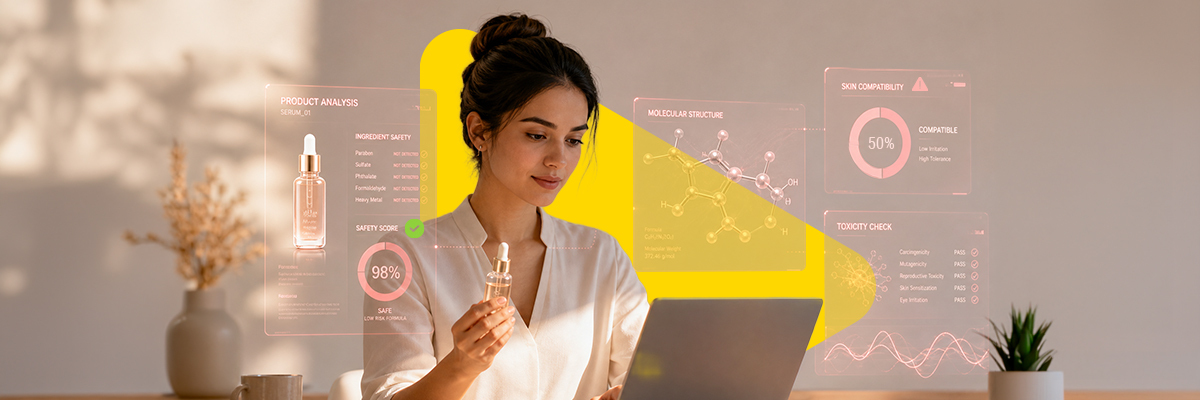
The global beauty and personal care industry is evolving rapidly, blending wellness, self-expression, and innovation into products used by billions every day. With the global cosmetics market exceeding $570 billion and U.S. consumer spending approaching $90 billion annually, product safety has become a strategic priority, not just a regulatory obligation.
As consumer awareness grows and regulatory frameworks such as the Modernization of Cosmetics Regulation Act (MoCRA) in the United States tighten oversight, cosmetic brands face mounting pressure to detect, assess, and mitigate safety risks proactively.
Unlike pharmaceuticals, cosmetics often reach consumers without extensive pre-market approval requirements, making post-market surveillance (cosmetovigilance) essential. Hidden threats such as allergenic ingredients, microbial contamination, endocrine-disrupting chemicals, toxic impurities, and counterfeit products can quickly escalate into consumer harm, costly recalls, and brand reputation crises.
Artificial Intelligence (AI) is now transforming cosmetovigilance from a reactive process into a predictive, scalable, and compliance-driven safety ecosystem.
The Top 5 Cosmetic Safety Risks — And How AI Strengthens Detection
1. Allergens and Sensitizers
Fragrances, preservatives, dyes, and other commonly used cosmetic ingredients can trigger allergic reactions, skin irritation, sensitivities, and contact dermatitis.
The Scientific Committee on Consumer Safety (SCCS) has repeatedly highlighted fragrance allergens as a significant public health concern, prompting stricter ingredient disclosure requirements across Europe.
AI Advantage:
- Natural Language Processing (NLP) scans adverse event reports, social media, customer reviews, and regulatory alerts
- Detects early patterns of allergic reactions or ingredient-linked sensitivities
- Supports faster reformulation and product safety interventions
2. Microbial Contamination
Improper preservation, manufacturing lapses, or poor storage conditions can lead to bacterial or fungal contamination, causing severe skin or eye infections.
Recent FDA recalls involving contaminated personal care products underscores the growing importance of contamination monitoring.
AI Advantage:
- Machine learning predicts contamination risk based on manufacturing and environmental data
- AI analyzes batch records, supply chain anomalies, and adverse event trends
- Enables earlier detection before widespread market impact
3. Toxic Impurities and Heavy Metals
Contaminants such as lead, arsenic, mercury, and cadmium may appear in cosmetics due to raw material sourcing or manufacturing failures.
Even low-level chronic exposure can present significant long-term health concerns.
AI Advantage:
- Predictive toxicology models identify formulation risks
- Data mining correlates laboratory findings with safety databases
- Automated anomaly detection flags ingredient sourcing inconsistencies
4. Endocrine-Disrupting Chemicals (EDCs)
Ingredients such as parabens and phthalates remain under increasing scrutiny due to potential hormonal disruption concerns.
Consumer demand for “clean beauty” and safer formulations is accelerating as research evolves.
AI Advantage:
- QSAR models assess chemical safety profiles
- Predictive analytics compare formulations against international safety databases
- Supports safer ingredient substitution recommendations
5. Counterfeit and Mislabelled Products
Counterfeit cosmetics sold through online channels often bypass safety testing and may contain dangerous ingredients.
Mislabeling can also expose consumers to undeclared allergens or prohibited substances.
AI Advantage:
- Computer vision validates packaging authenticity
- Blockchain integrations strengthen supply chain transparency
- AI cross-verifies regulatory filings, formulations, and lab verification data
AI-Powered Cosmetovigilance: From Reactive Compliance to Proactive Consumer Protection
Traditional cosmetic safety systems often respond only after incidents occur. AI changes this by enabling:
- Real-time adverse event intake and monitoring
- Early safety signal detection across global markets
- Automated regulatory reporting and documentation
- Predictive risk modeling for formulations and ingredients
- Operational scalability with reduced manual burden
By leveraging AI, brands can:
- Reduce recall frequency and associated costs
- Strengthen consumer trust and brand credibility
- Improve regulatory readiness across global jurisdictions
- Gain competitive differentiation through safety leadership
Driving Safety and Trust with CosmetoShield AI
CosmetoShield AI by Datafoundry empowers cosmetic and personal care brands to modernize safety monitoring through an integrated AI-powered cosmetovigilance platform.
Key Capabilities:
- Automates multi-channel adverse event intake, intelligent case triage, and end-to-end safety case management to improve operational efficiency
- Enables AI-powered signal detection through real-time trend analysis, early risk identification, and centralized dashboards for proactive safety monitoring
- Supports global regulatory compliance with MoCRA-ready workflows, international reporting capabilities, and audit-ready documentation
- Delivers operational intelligence with advanced safety analytics, ROI visibility, and workflow optimization for better strategic decision-making
- Offers flexible, scalable deployment models backed by life sciences and safety experts to support both enterprise and niche cosmetic brands
CosmetoShield AI enables brands to move beyond basic compliance toward predictive safety leadership.
As cosmetic regulations evolve and consumer expectations rise, safety monitoring can no longer rely solely on manual or reactive processes.
AI-powered cosmetovigilance represents the future of cosmetic safety—helping organizations uncover hidden risks, maintain compliance, and protect both consumers and brand equity.
For beauty brands aiming to scale responsibly, investing in intelligent safety infrastructure is no longer optional—it is essential.
Frequently Asked Questions (FAQs)
1. What is Cosmetovigilance?
Cosmetovigilance is the process of monitoring, assessing, and preventing adverse effects related to cosmetic products after they enter the market.
2. Why is AI important in cosmetic safety monitoring?
AI accelerates signal detection, automates case processing, identifies emerging safety risks earlier, and improves compliance efficiency.
3. How does MoCRA impact cosmetic brands?
MoCRA strengthens FDA oversight by increasing requirements for adverse event reporting, safety substantiation, and regulatory compliance.
4. What are the biggest cosmetic safety risks today?
Key risks include allergens, microbial contamination, toxic impurities, endocrine disruptors, and counterfeit products.
5. How does CosmetoShield AI help brands?
CosmetoShield AI automates safety workflows, improves compliance, enhances signal detection, and centralizes cosmetic vigilance operations.
6. Can AI reduce product recalls?
Yes. By identifying risks earlier and improving monitoring, AI can significantly reduce recall frequency and associated financial exposure.
Author: Ryanka Chauhan